Your period can provide useful clues about your health. Learn what irregular cycles, heavy bleeding, spotting, cramps, and missed periods may mean, plus how TCM and acupuncture may support women’s wellness.
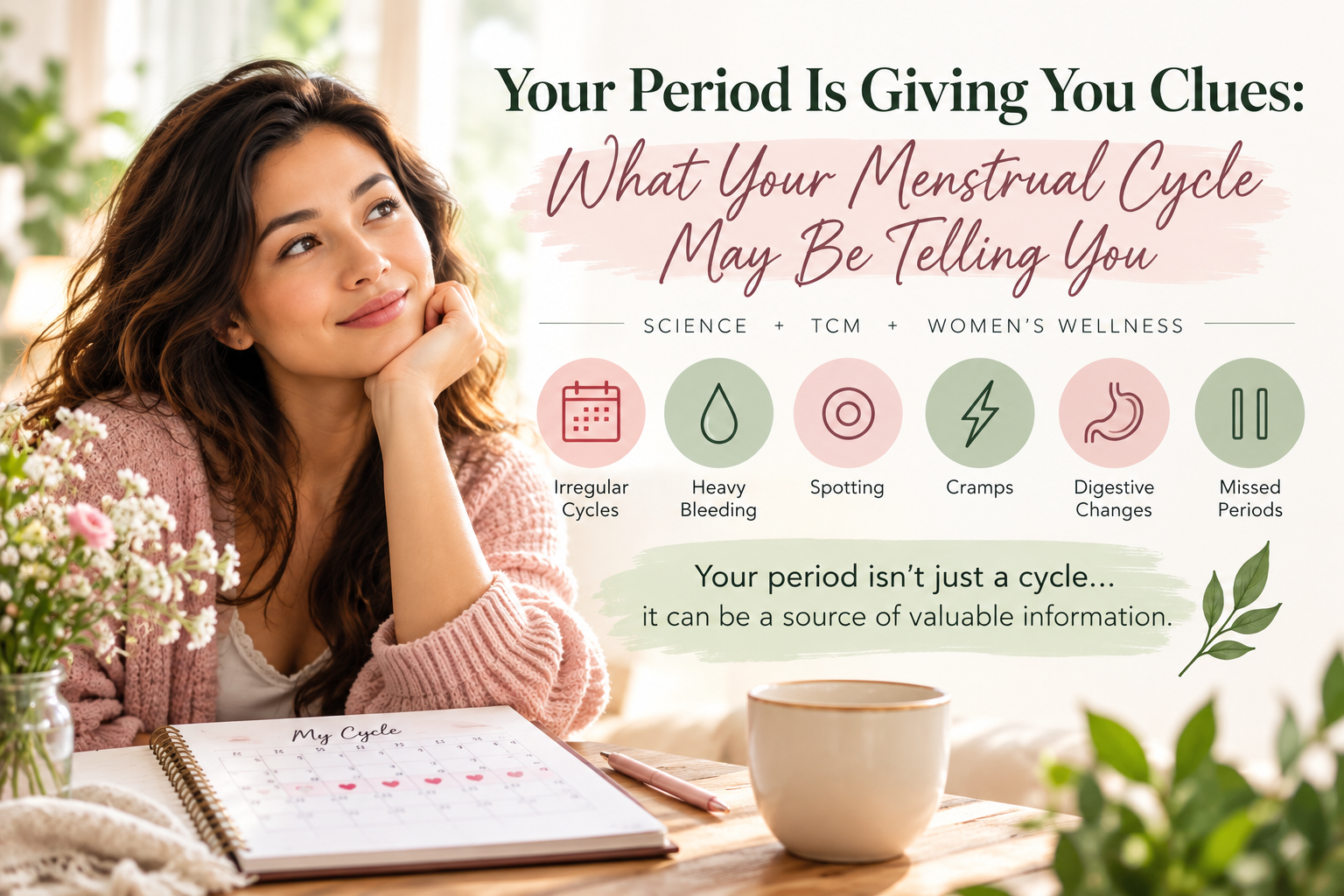
Have you ever looked at your period and wondered, “Is this normal?”
Maybe your cycle suddenly became shorter. Maybe your periods have become heavier. Perhaps you notice spotting between periods, painful cramps, clots, digestive changes, or months when your period seems to disappear completely.
Your menstrual cycle can provide useful information about what is happening in your body. But it is important to understand that one symptom rarely tells the whole story.
A popular Instagram graphic recently described the period as a woman's “report card,” connecting different menstrual symptoms to specific hormone levels. While the idea of paying attention to your cycle is valuable, some of those connections are much more complicated than a simple one-to-one relationship.
So, let's take a closer look.
At A Balanced You Acupuncture & Wellness Center in Jacksonville, Florida, we believe understanding your body is an important part of wellness. We also believe that your symptoms deserve to be looked at as a whole rather than reduced to one hormone or one explanation.
What Is a Normal Menstrual Cycle?
A menstrual cycle is counted from the first day of one period to the first day of the next.
According to the American College of Obstetricians and Gynecologists, menstrual cycles typically occur every 21 to 35 days in adults, although individual patterns can vary. A period generally lasts up to about 7 days.
That means having a cycle that isn't exactly 28 days does not automatically mean something is wrong.
What matters is understanding your own pattern.
If your cycles suddenly become much shorter, longer, heavier, more painful, or unpredictable, that change may be worth discussing with your healthcare provider.
Short or Long Cycles Don't Automatically Mean a Specific Hormone Is Low or High
The Instagram post suggests that very short cycles may indicate low progesterone and long cycles may indicate delayed ovulation.
There is some biological reasoning behind why ovulation patterns and reproductive hormones influence menstrual timing, but cycle length alone cannot tell you exactly what your progesterone or estrogen levels are.
Irregular or absent ovulation can contribute to abnormal bleeding. Conditions such as polycystic ovary syndrome (PCOS), thyroid problems, perimenopause, certain medications, changes in body weight, stress, and other health conditions can also affect menstrual cycles.
So instead of thinking:
“My cycle is short, therefore my progesterone is low,”
think:
“My cycle has changed. What could be contributing to that change?”
That question leads to a more meaningful conversation.
What About Heavy Periods?
Heavy bleeding deserves attention, especially when it interferes with your daily life.
The American College of Obstetricians and Gynecologists notes that heavy menstrual bleeding can include bleeding that lasts more than 7 days or bleeding that soaks through a pad or tampon every hour for several hours.
Heavy bleeding can have many possible causes, including problems with ovulation, fibroids, polyps, adenomyosis, bleeding disorders, and other conditions.
Therefore, heavy bleeding does not automatically mean you have “high estrogen.”
If your periods have become unusually heavy, it is important to investigate why rather than simply assuming it is a hormone imbalance.
Why Do Period Cramps Sometimes Come With Digestive Symptoms?
This touches on something that has a physiological explanation.
Period cramps are associated with prostaglandins, natural chemicals involved in uterine contractions. Higher prostaglandin activity can contribute to menstrual pain and can also be associated with symptoms such as diarrhea, nausea, and vomiting.
So if you notice changes in your digestion around your period, you're not imagining it.
However, severe or worsening menstrual pain should not simply be dismissed as “normal.”
Conditions such as endometriosis, adenomyosis, fibroids, ovarian cysts, and other pelvic conditions can cause significant menstrual pain.
What About Spotting?
Spotting between periods can happen for many reasons.
Hormonal contraception, ovulation, pregnancy, infections, changes in the cervix, uterine polyps, fibroids, and other conditions can contribute to unexpected bleeding.
Because there are many possible causes, spotting cannot automatically be interpreted as a sign of low progesterone.
If spotting is persistent, new for you, occurs after sex, or is accompanied by pain or other concerning symptoms, talk with your healthcare provider. Abnormal bleeding deserves appropriate evaluation.
Missing Periods Are Worth Paying Attention To
A missed period can happen for many reasons.
Pregnancy, breastfeeding, menopause, stress, significant weight changes, excessive exercise, PCOS, thyroid problems, certain medications, and other medical conditions can all affect menstruation.
If you have been getting periods and they suddenly stop for three months or longer without an obvious explanation, it is recommended and worth a discussion with a healthcare professional.
Your body isn't necessarily “failing.” It may simply be communicating that something has changed.
How Does Traditional Chinese Medicine Look at Menstrual Health?
Traditional Chinese Medicine approaches the menstrual cycle from a different framework than conventional Western medicine.
Rather than focusing only on laboratory hormone levels, a TCM practitioner may consider patterns involving Qi, Blood, Yin, Yang, meridians, digestion, sleep, stress, energy, and the characteristics of the menstrual cycle.
For example, a practitioner may ask about:
- The timing and length of your cycle
- Flow and color
- Presence of clots
- Menstrual pain
- Energy levels
- Sleep
- Digestion
- Stress
- Temperature sensations
- Emotional well-being
This information can help the practitioner develop an individualized TCM treatment approach.
It is important to understand that TCM concepts such as Qi and Blood are traditional diagnostic frameworks and are not direct equivalents of modern laboratory measurements such as estrogen or progesterone.
That distinction allows us to appreciate TCM while still respecting what modern medical research can and cannot tell us.
Can Acupuncture Help With Menstrual Pain?
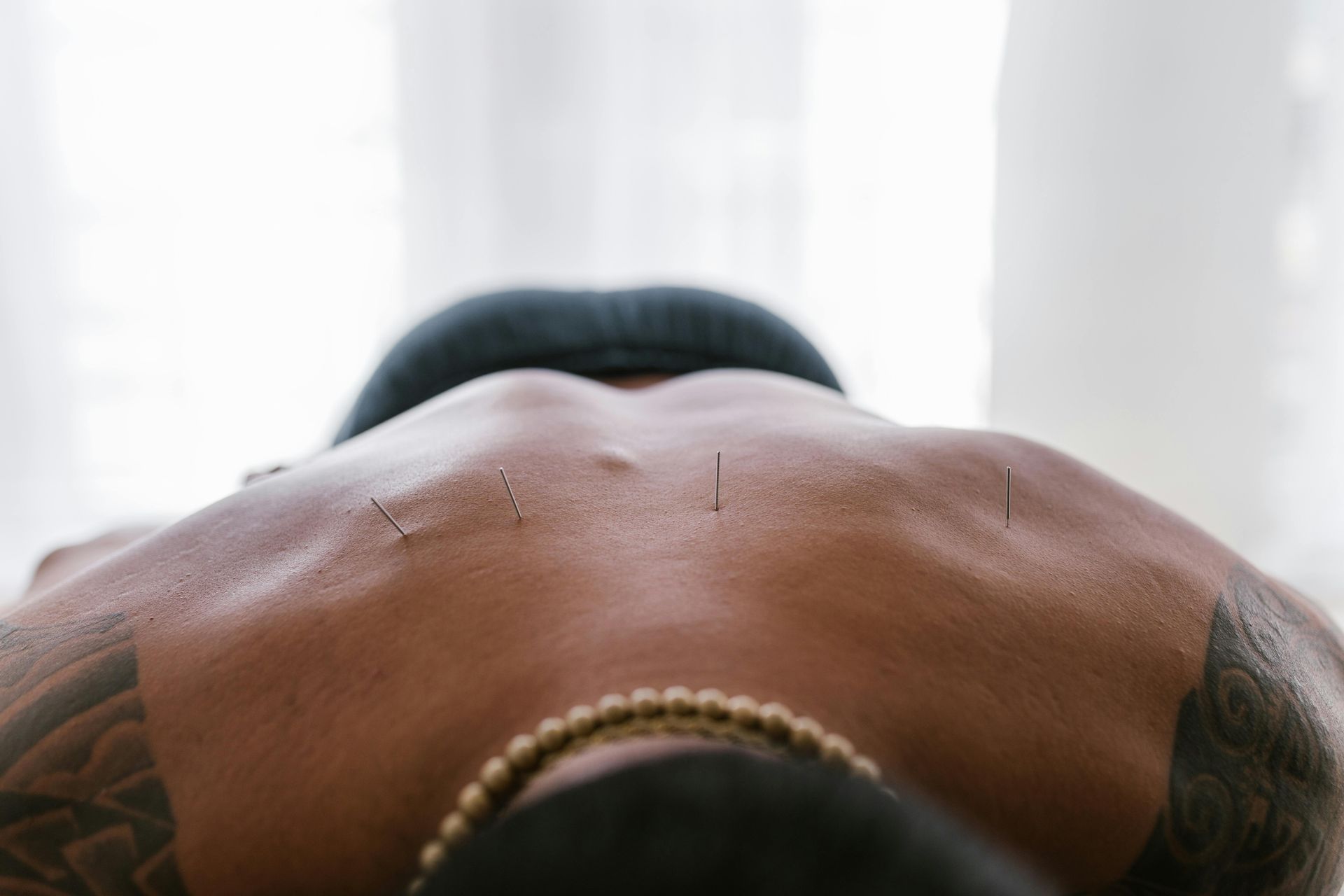
There is growing research examining acupuncture and other TCM-based approaches for menstrual pain.
ACOG notes that acupuncture and acupressure may be useful for treating painful periods.
Recent systematic reviews have also reported potential benefits of acupuncture-related approaches for primary dysmenorrhea, although researchers continue to note limitations in study quality and the need for stronger evidence.
One 2024 systematic review and meta-analysis examining the Sanyinjiao (SP6) acupuncture point included 19 studies involving 1,171 people with primary dysmenorrhea and found reductions in pain with both acupuncture and acupressure, although the studies showed considerable variation.
This is encouraging, but acupuncture should be viewed as a complementary option, not a substitute for appropriate medical evaluation.
Your Period Is Information, Not a Diagnosis
This may be the most important takeaway.
Your menstrual cycle can give you clues, but a symptom is not a diagnosis.
A short cycle doesn't automatically mean low progesterone.
A long cycle doesn't automatically mean delayed ovulation.
Heavy bleeding doesn't automatically mean high estrogen.
Spotting doesn't automatically mean low progesterone.
And cramps don't automatically mean inflammation is the only issue.
Your body is more complex than an Instagram checklist.
Instead of asking, “What single hormone is causing this?”, consider asking:
“What has changed in my body, and what information do I need to understand why?”
That shift can help you become a more informed participant in your healthcare.
When Should You Seek Medical Care?
Talk with a healthcare professional if you experience:
- New or persistent irregular periods
- Very heavy bleeding
- Bleeding lasting longer than 7 days
- Bleeding between periods or after sex
- Severe or worsening menstrual pain
- Periods that suddenly stop
- Dizziness, fainting, or significant weakness associated with bleeding
- Symptoms that interfere with your normal daily activities
Heavy bleeding accompanied by dizziness, fainting, shortness of breath, chest pain, or other concerning symptoms may require urgent medical attention.
A More Balanced Approach to Women's Wellness
At A Balanced You Acupuncture & Wellness Center, we believe women's health deserves a personalized approach.
Acupuncture and Traditional Chinese Medicine may be incorporated as part of a broader wellness plan, depending on your individual needs. Our goal is not to tell you to ignore your symptoms or replace your medical care. Instead, we want to help you better understand your body and explore appropriate complementary wellness options.
Your period isn't simply something you have to “put up with.”
It can be one piece of information that helps you understand your health.
Listen to your body. Track your patterns. Ask questions. And when something changes, don't be afraid to seek help. We are here for you.
References
- American College of Obstetricians and Gynecologists. Abnormal Uterine Bleeding.
- American College of Obstetricians and Gynecologists. Amenorrhea: Absence of Periods.
- American College of Obstetricians and Gynecologists. Dysmenorrhea: Painful Periods.
- American College of Obstetricians and Gynecologists. Endometriosis.
- National Institute for Health and Care Excellence. Heavy Menstrual Bleeding: Assessment and Management.
- National Center for Complementary and Integrative Health. Traditional Chinese Medicine: What You Need to Know.
- Chen et al. Traditional Chinese Medicine interventions based on meridian theory for pain relief in patients with primary dysmenorrhea: a systematic review and network meta-analysis. 2024.
- Ravi et al. Effect of Sanyinjiao (Spleen-6) Acupoint for Pain Management in Primary Dysmenorrhea: An Updated Systematic Review and Meta-Analysis. 2024.
SHARE WITH FRIENDS