Wondering what happens during your first acupuncture appointment? Learn what to expect, how to prepare, what acupuncture feels like, and how A Balanced You can support your wellness journey in Jacksonville, FL.

What to Expect During Your First Acupuncture Appointment
If you've been thinking about trying acupuncture but aren't quite sure what to expect, you're not alone.
Maybe you've seen pictures of acupuncture needles and wondered, Does it hurt? What happens during the appointment? Do I need to prepare? What will the practitioner ask me?
It's completely natural to have questions, especially when you're trying something new for your health and wellbeing.
At A Balanced You Acupuncture & Wellness Center in Jacksonville, Florida, we believe your first visit should feel like an opportunity to be heard, understood, and supported.
Acupuncture is one part of Traditional Chinese Medicine (TCM), a whole-person approach that considers the connections between different aspects of health. Modern research also suggests acupuncture can influence the nervous system and other tissues, although scientists are still studying exactly how it works.
So, what actually happens when you walk into your first acupuncture appointment?
Let's take it step by step.
Your First Acupuncture Appointment Starts With a Conversation
One of the biggest misconceptions about acupuncture is that you walk into the treatment room and immediately receive needles.
That's usually not how the process begins.
At A Balanced You, an initial visit typically starts with an evaluation of your current condition and a conversation about the concerns that brought you in and discussion about your medical history. From there, a personalized plan of care can be developed. Treatment may begin after the evaluation or be scheduled for another time that works better for you.
Your practitioner may ask questions about things such as:
- Your primary concerns or symptoms
- How long you've been experiencing them
- Your general health history
- Your sleep habits
- Your diet
- Your energy levels
- Your digestion and bowel habits
- Your emotional wellbeing
- Other factors that may affect how you're feeling
You may wonder why an acupuncturist would ask about something that doesn't seem directly connected to your reason for making an appointment.
This is where the whole-person philosophy of Traditional Chinese Medicine comes in.
Rather than looking at one symptom in isolation, TCM considers patterns throughout the body and how physical, emotional, and lifestyle factors may interact.
In other words, your appointment is not simply about where something hurts.
It's more about understanding the whole You.
What Happens During an Acupuncture Consultation?
Your consultation is an important part of your first acupuncture experience.
Think of it as a conversation where you have an opportunity to explain what you're experiencing in your own words.
If you're dealing with discomfort, for example, your practitioner may want to understand when it started, what makes it better or worse, whether it affects your sleep, and how it influences your everyday activities.
Don't worry if you're not sure what information is important.
You don't need to arrive with a perfect medical history or know exactly what to tell your acupuncturist.
Simply be honest about what you've been experiencing.
It's also a good idea to tell your practitioner about medications, supplements, existing medical conditions, pregnancy, or anything else that could be relevant to your care.
This helps your practitioner determine whether acupuncture is appropriate for you and whether your treatment needs to be modified.
Will Acupuncture Needles Hurt?
This is probably one of the most common questions people have before their first appointment.
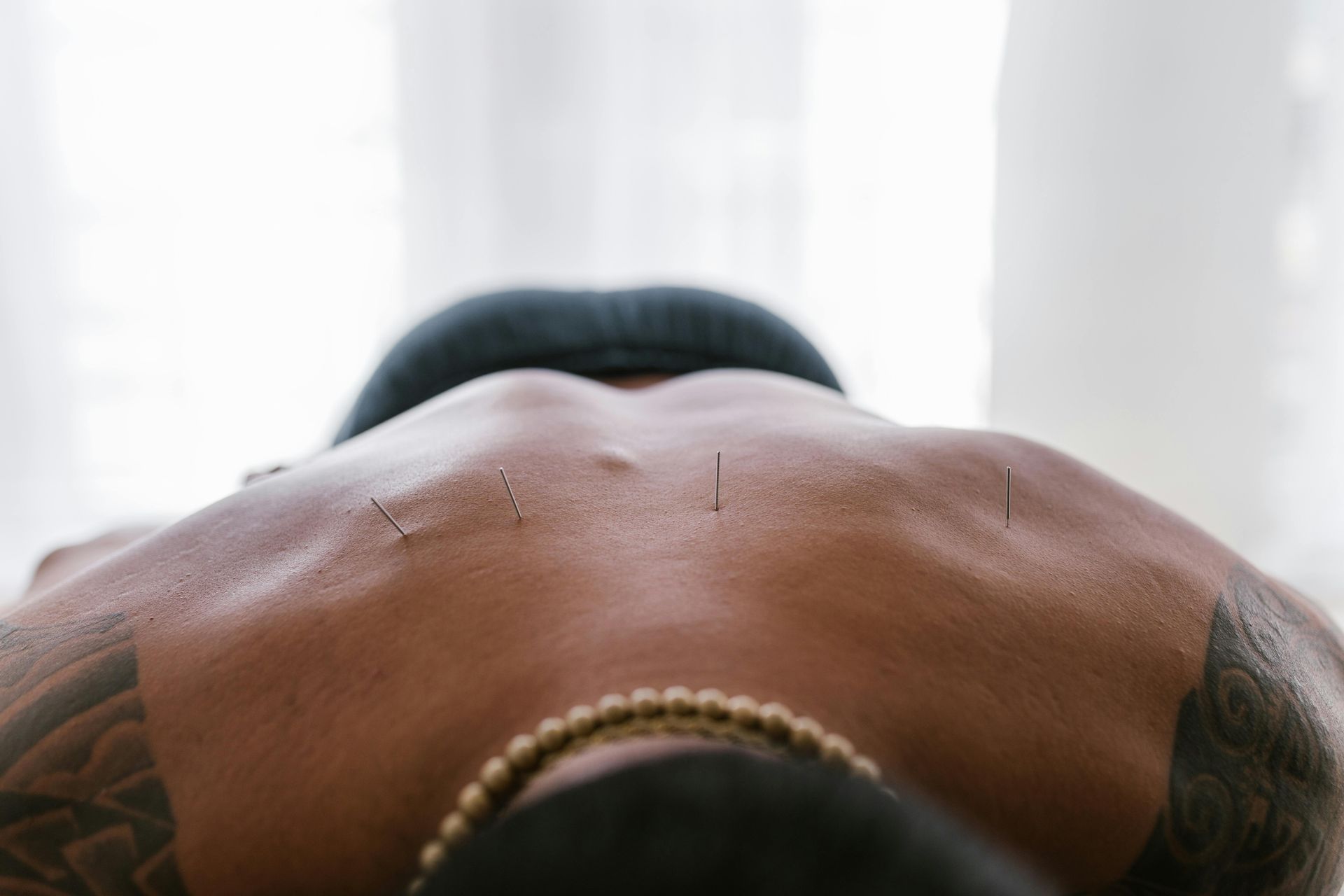
The good news is that acupuncture needles are extremely thin.
According to Cleveland Clinic, acupuncture needles are sterile, disposable, and much thinner than the needles commonly used for injections or blood draws. Some people feel a small prick when a needle is inserted, while others describe sensations such as tingling, heaviness, warmth, or a dull ache.
Everyone experiences acupuncture differently.
You may barely notice the needles.
You may feel a brief sensation as a needle is inserted.
Or you may notice a gentle sensation around the acupuncture point after the needle is placed.
If you're nervous, tell your practitioner.
There is no prize for pretending you're comfortable when you're not.
Communication is an important part of a good acupuncture experience.
What Are Acupuncture Needles Like?
If you've never seen an acupuncture needle up close, you may imagine something similar to the needles used for injections.
They're not.
Acupuncture needles are solid, extremely thin needles designed specifically for acupuncture treatment.
The U.S. Food and Drug Administration regulates acupuncture needles as medical devices and requires them to be sterile, nontoxic, and labeled for single use.
This is one reason it is important to receive acupuncture from a qualified and properly trained practitioner who follows appropriate safety and clean-needle procedures.
Acupuncture is generally considered safe when performed properly with sterile needles, although minor effects such as soreness, bruising, or small amounts of bleeding can occur. Serious complications are rare but can occur when acupuncture is performed improperly.
What Happens After the Needles Are Placed?
Once the needles are positioned, you may be encouraged to relax for a period of time.
For some people, this becomes one of the most peaceful parts of the appointment.
You may close your eyes.
You may focus on your breathing.
You may simply lie comfortably and allow yourself to slow down for a while.
Some people become very relaxed during treatment. Others may notice varying sensations in their body and around the acupuncture points.
There is no single "correct" way to experience acupuncture.
Your experience is your own.
Do You Have to Prepare for Your First Acupuncture Appointment?
You generally don't need to do anything complicated before an acupuncture appointment.
However, a few simple steps can help you feel more comfortable.
- Eat, But Don't Arrive Uncomfortably Full
It's generally a good idea not to arrive extremely hungry, but you also don't need to eat a large meal immediately before treatment.
A comfortable, normal meal or snack can help you feel more at ease.
- Wear Comfortable Clothing
Depending on the areas being treated, comfortable clothing that allows reasonable access to the body can make your appointment easier.
Loose-fitting clothing can be especially convenient.
- Drink Water
Arriving reasonably hydrated is a simple way to support your overall comfort.
- Bring Your Questions
If you're nervous, write down your questions before you arrive.
You might ask:
- How many sessions might I need?
- What might I feel during treatment?
- What should I do after acupuncture?
- Is acupuncture appropriate alongside my current healthcare?
- What should I tell you about my medications or supplements?
There are no silly questions when it comes to your health.
What Should You Tell Your Acupuncturist?
One of the most helpful things you can do is provide accurate information about your health.
Be sure to mention relevant medical conditions, medications, supplements, allergies, pregnancy, or other factors that could affect your care.
This is particularly important if you're receiving treatment for a specific health concern or using acupuncture alongside conventional medical care.
Acupuncture should complement appropriate medical care when needed, not replace necessary diagnosis or treatment.
If you're unsure whether acupuncture is appropriate for your situation, talk with your healthcare professional and your acupuncturist.
What Does Science Say About Acupuncture?
Acupuncture has been practiced for thousands of years, but modern researchers continue to investigate how it works and which conditions it may help.
The National Center for Complementary and Integrative Health, part of the National Institutes of Health, notes that acupuncture may affect the nervous system and other tissues, but that the complete mechanism is not yet understood.
Research is particularly developed around certain types of pain.
For example, NCCIH reports that studies have found acupuncture may help with conditions including back pain, neck pain, knee osteoarthritis pain, and headaches.
That doesn't mean acupuncture is the right solution for every person or every condition.
Your individual health history matters.
This is another reason the initial consultation is important.
What Can You Expect to Feel After Acupuncture?
People respond differently to acupuncture.
Some people feel relaxed or sleepy afterward. Others feel energized or simply notice that they feel different from when they arrived.
You may experience any of the following: mild tenderness or bruising around an acupuncture point, lightheadedness, or mild headache.These are usually signs of the detoxification process of acupuncture treatment.
Because individual responses vary, your practitioner can provide guidance based on your particular treatment.
If you feel unusually unwell or experience concerning symptoms after treatment, contact your healthcare provider or seek appropriate medical attention.
How Many Acupuncture Treatments Will You Need?
There isn't one universal number of acupuncture sessions that works for everyone.
Your treatment plan depends on your goals, your health history, the nature and duration of your concerns, and how you respond to treatment.
Rather than assuming that one session will solve everything, think of your first appointment as the beginning of a conversation about your wellness.
Your practitioner can assess your situation and discuss an appropriate plan with you.
At A Balanced You, care begins with an evaluation and a personalized plan rather than a one-size-fits-all approach.
Your First Acupuncture Appointment Doesn't Have to Be Intimidating
If you're nervous about acupuncture, you're not required to walk into your first appointment already knowing everything.
You don't have to understand Traditional Chinese Medicine.
You don't have to know the names of acupuncture points.
You don’t have to know anything about acupuncture… Here at A Balanced You, our job is also to teach you.
You simply need to be willing to have a conversation about what you're experiencing.
Your first appointment is an opportunity to ask questions, learn more about your options, and decide whether acupuncture feels like an appropriate addition to your wellness journey.
Why Choose A Balanced You in Jacksonville, Florida?
At A Balanced You Acupuncture & Wellness Center, our approach is centered around individualized care and understanding the whole person.
Your health isn't just a collection of symptoms.
Your sleep, stress, lifestyle, physical wellbeing, emotional wellbeing, and daily experiences can all be part of the bigger picture.
That's why we take time to listen and understand your concerns before developing a personalized plan of care.
If you've been curious about acupuncture but haven't taken the first step, you don't have to figure everything out on your own.
We're here to answer your questions and help you understand what acupuncture may look like for you.
Ready to Experience Your First Acupuncture Appointment?
If you're in Jacksonville, Florida, and curious about acupuncture, consider making your first appointment a conversation rather than something to be nervous about.
Come with your questions.
Tell us what you're experiencing.
And give yourself an opportunity to explore another approach to supporting your wellbeing.
Ready to learn more about acupuncture at A Balanced You Acupuncture & Wellness Center? Schedule your appointment and take the first step toward a more balanced you.
SHARE WITH FRIENDS