Is your body running hot or cold? Discover how to read your tongue in Traditional Chinese Medicine and which foods to eat to bring your body back into balance.
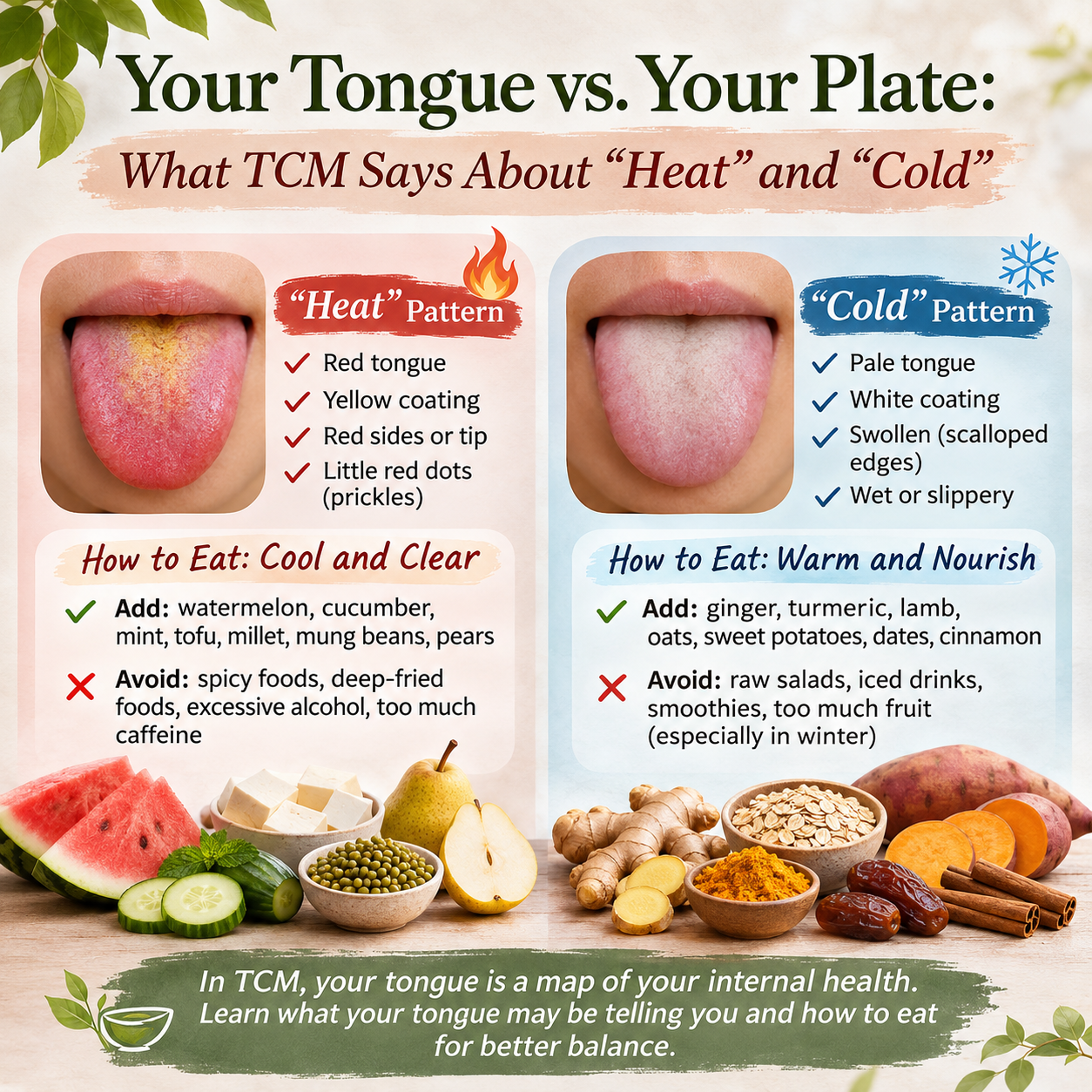
If you’ve ever looked in the mirror and thought, "Why does my tongue look like that?" you’re not alone. In Traditional Chinese Medicine (TCM), the tongue is one of the most important diagnostic tools we have. It acts like a map, reflecting what is happening inside your body.
One of the most common imbalances we see at our Jacksonville clinic is the battle between Heat and Cold.
When your body is out of balance, it will show up on your tongue, in your symptoms, and in how you feel. The good news? You can use your plate to fix it. Here is how to decode your tongue and eat for your specific pattern.
The "Heat" Pattern: When Your Body is Running Hot
Imagine a car engine that has been running too fast without coolant. Eventually, it overheats. In TCM, this happens when there is too much "Yang" (hot, active energy) or when inflammation, stress, or spicy foods build up in the body.
What your tongue looks like:
- Red body: The overall color of your tongue is noticeably redder than a healthy pink.
- Yellow coat: A thick, yellow coating on the surface.
- No coat or peeling coat: The tongue might look smooth and shiny because the body is using up its fluids to fight the heat.
- Red sides or tip: The edges and tip are bright red (often pointing to Liver or Heart heat).
- Prickles: Little red dots or "prickles" on the surface.
What you might feel (Symptoms):
- You tend to run warm or have hot flashes.
- You feel thirsty often and prefer cold drinks.
- You experience irritability, anger, or a short temper.
- Constipation (dry stools).
- Restless sleep or night sweats.
How to eat for "Heat": Cool and Clear
If you are running hot, you need foods that are energetically cooling to extinguish the fire. You want to focus on fresh, raw, or lightly cooked foods that hydrate the body.
- Great foods to add: Watermelon, cucumber, mint, tofu, millet, mung beans, and pears.
- What to avoid: Spicy foods, deep-fried foods, excessive alcohol, and too much caffeine.
The "Cold" Pattern: When Your Body Lacks Fire
The opposite issue is a lack of warming energy. This happens when your "Yang" energy is depleted, or when "Cold" invades the body, slowing down digestion and circulation.
What your tongue looks like:
- Pale body: The tongue lacks red color and looks light pink or whitish.
- White coat: A thick, white coating on the surface.
- Bluish tint: In more severe cases, the tongue may have a slight purple or blue hue, indicating poor circulation.
- Wet or slippery: The tongue looks overly moist.
- Swollen: The tongue looks puffy and might have scalloped edges (teeth marks on the sides).
What you might feel (Symptoms):
- You constantly have cold hands and feet.
- Low energy or fatigue.
- You crave warm drinks and warm environments.
- Achy, painful joints that get worse in cold weather.
- Severe menstrual cramps that feel better with a heating pad.
How to eat for "Cold": Warm and Nourish
If you are running cold, you need to stoke the fire of your digestion. You want to focus on cooked, warming, and grounding foods.
- Great foods to add: Ginger, turmeric, lamb, oats, sweet potatoes, dates, and cinnamon.
- What to avoid: Raw salads, iced drinks, smoothies, and too much fruit (especially in the winter).
Why Balance Matters
We rarely fit perfectly into just one box. You might have a red tongue but still feel cold (this is called "Damp Heat" or a complex pattern like "Yin Deficiency").
This is why guessing based on a chart is only the first step. A true TCM diagnosis requires a practitioner to look at your tongue, feel your pulse, and listen to your whole story.
At A Balanced You, we use acupuncture and herbal medicine to physically rebalance your internal thermostat. But the most powerful tool you have is what you put on your plate every single day.
If you are tired of feeling too hot, too cold, or just out of balance, we are here to help.
We offer a Free 20-Minute Consultation at A Balanced You Acupuncture & Wellness Center in Jacksonville. Let’s look at the whole picture and find a wellness plan that works for your unique body.
References
- Maciocia, G. (2015). The Foundations of Chinese Medicine: A Comprehensive Text. Elsevier. (References to Tongue Diagnosis and Heat/Cold patterns).
- Traditional Chinese Medicine: Principles and Practice. (General reference on the energetics of food).
- Pitchford, P. (2002). Healing with Whole Foods: Asian Traditions and Modern Nutrition. North Atlantic Books.
SHARE WITH FRIENDS